
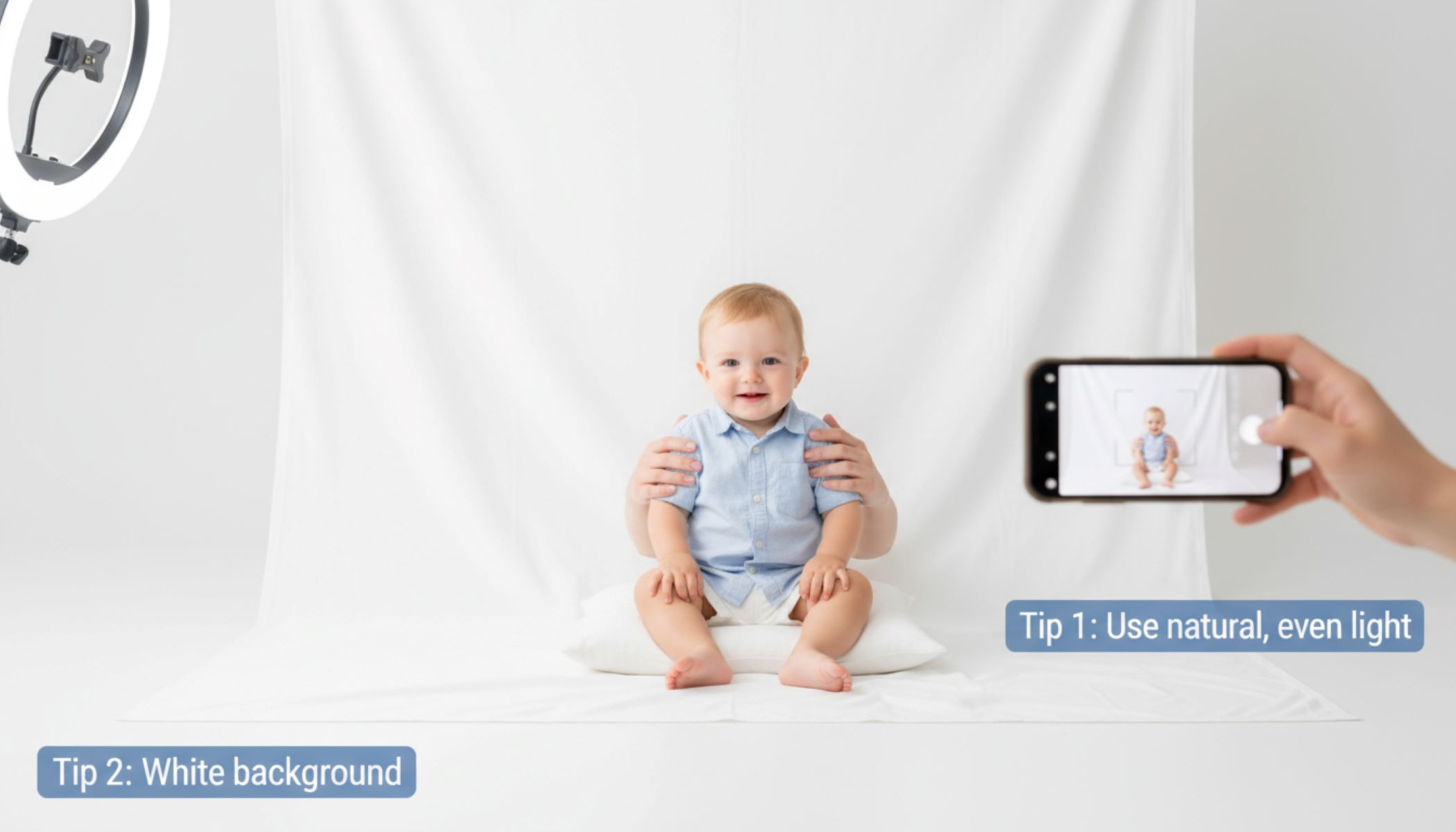
Taking a child’s document photo—whether for a passport, visa, school ID, or any other official use—can feel like an impossible task. Kids rarely sit still, and the rules for official photos are usually very strict. But here’s the good news: with the right preparation, a calm approach, and a few handy tricks, you can take a perfect child’s document photo at home without the stress. Let’s go step by step and break it all down.
Why Getting a Child’s Document Photo Right Matters
A child’s document photo is far more than just a snapshot for family memories—it serves as an official representation of the child’s identity. Governments and other authorities use these photos to confirm that the person in the document matches the individual presenting it. Any deviation from the required standards—such as improper lighting, an obstructed face, or a non-neutral expression—can lead to the photo being rejected. This can delay processes for passports, visas, school IDs, and other critical documents, sometimes causing unnecessary stress for both parents and children.
Accuracy in these photos is crucial because they are a formal proof of identity. Unlike casual photos, official document photos must meet specific technical requirements including size, background color, head position, and facial expression. Even minor errors, like a tilted head or shadowed background, can result in a photo being deemed invalid. Authorities are strict because these images are often used for security purposes, border control, and official verification, making precision non-negotiable.
Moreover, the impact of a rejected photo extends beyond inconvenience. Missing deadlines for submitting documents due to incorrect photos can affect travel plans, school enrollments, or government registrations. Parents may face additional costs and rescheduling, and children might need to undergo repeated sittings, which can be stressful for both parties. Ensuring that the first photo attempt is accurate saves time, money, and a lot of frustration.
Think of the child’s document photo as a key that grants access to important opportunities. Just as a physical key must fit perfectly into a lock, a document photo must meet strict criteria to unlock official approvals. Whether it’s for a passport to explore the world, a school ID to gain access to education, or a medical card for healthcare services, a well-prepared photo ensures smooth processing and avoids unnecessary delays. In essence, this small photograph carries a big responsibility, and getting it right the first time is essential.
Common Challenges Parents Face
- Children are naturally active and rarely stay still. One moment they’re smiling at you, the next they’re turning away or looking in a completely different direction, making it difficult to capture a clear, front-facing photo.
- Infants and very young babies cannot hold their heads upright on their own. This lack of head control makes positioning tricky and often requires extra support or assistance to achieve the proper alignment needed for official photos.
- Lighting can be a major obstacle. Harsh or uneven lighting may create shadows across the child’s face, highlight unwanted background details, or cause red-eye in flash photography. Proper lighting is essential to meet official photo standards.
- Many official guidelines have strict restrictions on props, accessories, or distractions. Items such as toys, hats, headbands, or pacifiers are generally not allowed, which can make it harder to keep a child calm and cooperative during the photo session.
- Achieving the correct facial expression is challenging. Authorities usually require a neutral expression with the mouth closed and both eyes open. Children often smile, frown, or make unintended facial expressions, increasing the likelihood of a rejected photo.
- Background requirements add another layer of complexity. Most regulations insist on a plain, light-colored background. Any patterned wallpaper, furniture, or clutter can render the photo unacceptable.
- Clothing can inadvertently interfere with the photo. Bright or patterned clothing, hoods, or large collars may clash with the background or obscure important facial features, leading to disqualification.
- Timing is crucial. Photographing a child when they are tired, hungry, or irritable can result in fussiness or non-cooperation, making the process even more challenging.
- Equipment handling poses difficulties. Parents must juggle camera settings, angles, and framing while trying to manage the child’s attention, often without extra hands or assistance.
- Overall stress levels can escalate quickly. Frustration, both from parents and children, can negatively impact the session, making it harder to capture a compliant, high-quality document photo.
Getting Prepared Before the Photo Session
| Step | Why It Matters | How to Do It | Tips | Common Mistakes to Avoid |
| Pick the Right Time | A calm, rested child is more likely to cooperate. | Schedule the photo after naps or meals for infants and toddlers. | Observe your child’s routine and choose the quietest time of day. | Trying to take a photo when the child is tired, hungry, or fussy. |
| Set Up the Background | Authorities require a plain, light-colored background for compliance. | Use a white wall or light-colored sheet, taped smooth and flat. | Ensure no wrinkles, patterns, or furniture are visible. | Wrinkled sheets, patterned backgrounds, or cluttered surroundings. |
| Have Everything Ready | Reduces stress and avoids interruptions during the session. | Prepare camera, tripod, lighting, and props ahead of time. | Keep a spare battery or charger ready for devices. | Forgetting equipment, running out of battery, or leaving setup incomplete. |
| Arrange Lighting | Proper lighting prevents shadows and ensures facial features are clear. | Use natural light from windows or soft artificial lights. | Face the child toward the light source to avoid shadows. | Using overhead lights or harsh flash that creates shadows or red-eye. |
| Plan Your Approach | Ensures the session runs smoothly and child cooperates. | Have a strategy for calming, engaging, and posing the child. | Use toys, sounds, or funny faces to attract attention. | Trying to take the photo without a plan or expecting the child to stay still naturally. |
Lighting: The Secret Ingredient
Lighting is one of the most critical factors in taking a successful child’s document photo. Even if you have the perfect background, a well-behaved child, and a high-quality camera, poor lighting can ruin the image and lead to rejection. Shadows, uneven brightness, glare, or harsh highlights can obscure facial features, distort colors, and make the photo fail official standards. Proper lighting ensures that every detail of your child’s face is clearly visible, which is essential for identification purposes.
Natural light is generally the best option when photographing children. A window with soft, indirect daylight provides even illumination and helps avoid harsh contrasts. Positioning your child near a window can create a bright and clear image without causing discomfort, unlike intense artificial lights. Morning or late afternoon light often works best because it is softer and more diffused than midday sunlight, reducing the risk of shadows on the face.
Avoid overhead lights, which are common in many homes, because they tend to cast unflattering shadows under the eyes, nose, and chin. These shadows can make your child appear tired or distort their facial features, increasing the chances that the photo will be rejected. Instead, aim for a light source that illuminates the face evenly from the front or slightly to the side. If necessary, use a simple white reflector, like a piece of paper or light-colored board, to bounce light and fill in shadows.
Using a camera flash is generally discouraged for child document photos. Flash can cause red-eye, overexpose certain areas of the face, and make children uncomfortable, resulting in unnatural expressions or squinting. If you must use artificial light, choose soft, diffused lighting instead. Lamps with diffusers or indirect lighting work better than direct, harsh beams. The goal is to create a photo where your child’s facial features are clear, the background is evenly lit, and no shadows or glare interfere with the image’s compliance with official standards.
Choosing the Right Camera or Device
- Modern smartphones are usually sufficient for capturing a child’s document photo. Most phones today have high-resolution cameras that meet official requirements for clarity and detail. Ensure the lens is clean and free from smudges to avoid blurry images.
- A tripod can be extremely helpful, especially when photographing a squirming toddler or trying to maintain a consistent angle. It keeps the camera steady, prevents shakes, and allows you to focus entirely on positioning and calming your child.
- Using a self-timer or remote shutter button allows you to take the photo without having to hold the camera. This is particularly useful when both hands are needed to position the child or keep them engaged, ensuring the image is perfectly framed and stable.
- Check that your camera or device has enough storage and battery life before starting the session. Running out of memory or power mid-session can disrupt the process and increase stress for both you and your child.
- Ensure the camera settings are correct. Set the resolution to the highest available and disable any filters, portrait effects, or beautification modes, as these can alter facial features and make the photo non-compliant.
- Keep the camera at eye level with the child to maintain the correct perspective. Shooting from above or below can distort facial proportions and result in a photo that fails official standards.
- Consider using burst mode to capture multiple shots in quick succession. Children often move unpredictably, and taking several photos rapidly increases the chance of getting a perfectly timed, compliant shot.
- Make sure the focus is sharp, especially on the eyes and face. Most smartphones allow you to tap the screen to lock focus on the child’s face, ensuring clarity and compliance with identification requirements.
- Avoid using digital zoom, which can reduce image quality. Instead, move the camera physically closer to the child while maintaining proper framing and background compliance.
- If available, use natural lighting rather than relying solely on indoor artificial lighting, as this enhances detail, reduces shadows, and ensures the photo meets official clarity standards.
How to Position Your Child
| Age Group | Positioning | Background Requirements | Tips for Getting Cooperation | Common Mistakes to Avoid |
| Babies | Lay the baby flat on a plain, white sheet on the bed or floor. Take the photo straight down from above. | Plain, light-colored sheet, no patterns or wrinkles. | Ensure no toys, hands, or blankets are visible. Take multiple shots quickly to capture attention. | Letting objects or blankets obscure the face, tilting the head, or creating shadows. |
| Toddlers | Sit them in a supportive chair with back straight. Keep them facing forward. | Light-colored, plain backdrop with no distractions. | Use gentle distractions, noises, or ask them to look at your forehead to maintain gaze. | Allowing the child to fidget, look away, or lean back, creating misalignment. |
| Older Children | Ask them to sit or stand tall against a wall. Ensure shoulders are straight. | Plain, light-colored wall or backdrop with no patterns. | Remind them to keep a neutral expression, maybe practice a few times before the real shot. | Smiling, making funny faces, or leaning in a way that distorts head proportions. |
| Infants with Head Support | Place a firm pillow under a white sheet for extra head support if needed. | Same plain, light-colored background as for babies. | Gently hold or adjust head to stay centered while photographing. | Not supporting the head properly, causing slumping or tilted positioning. |
| General Tips | Keep camera at eye level to avoid perspective distortion. | Ensure consistent lighting and no shadows. | Take multiple photos to select the best one, stay patient, and keep the session short. | Using uneven lighting, wrong camera angle, or trying to do everything in one shot. |
Expression and Eyes: The Hardest Part
Capturing the right expression in a child’s document photo is often the biggest challenge for parents. Unlike adults, children naturally struggle to maintain a neutral expression and keep both eyes open at the same time. Authorities usually require a calm, straightforward look with the mouth closed and eyes fully visible. Any deviation, such as smiling, frowning, squinting, or looking away, can result in the photo being rejected. Achieving this can feel like trying to catch lightning in a bottle, but with the right approach, it’s entirely possible.
For toddlers, timing is everything. Young children often move unpredictably, so waiting for a moment of stillness can be frustrating. One effective trick is to create a countdown—“1-2-3!”—and snap the photo immediately after. This encourages the child to focus on the camera for a brief moment, capturing the correct expression before they look away or fidget. Practicing the countdown a few times before the real photo can also help the child understand what’s expected.
When photographing babies, grabbing attention without causing distress is key. Using small toys, rattles, or gentle sounds near the camera can direct the baby’s gaze toward the lens. The goal is to keep the eyes open and looking forward without startling or upsetting the child. Parents often find that multiple quick shots during this brief window are necessary to get a usable photo. Patience and a calm approach make all the difference in these moments.
For shy or older children, it can help to let them practice a few silly faces first. By allowing the child to express themselves freely, they become comfortable in front of the camera. Once they are relaxed, guide them into a neutral expression and take several shots to ensure compliance. Combining patience, encouragement, and small attention-getting techniques usually results in a compliant photo that meets all official standards while keeping the child happy and stress-free.