
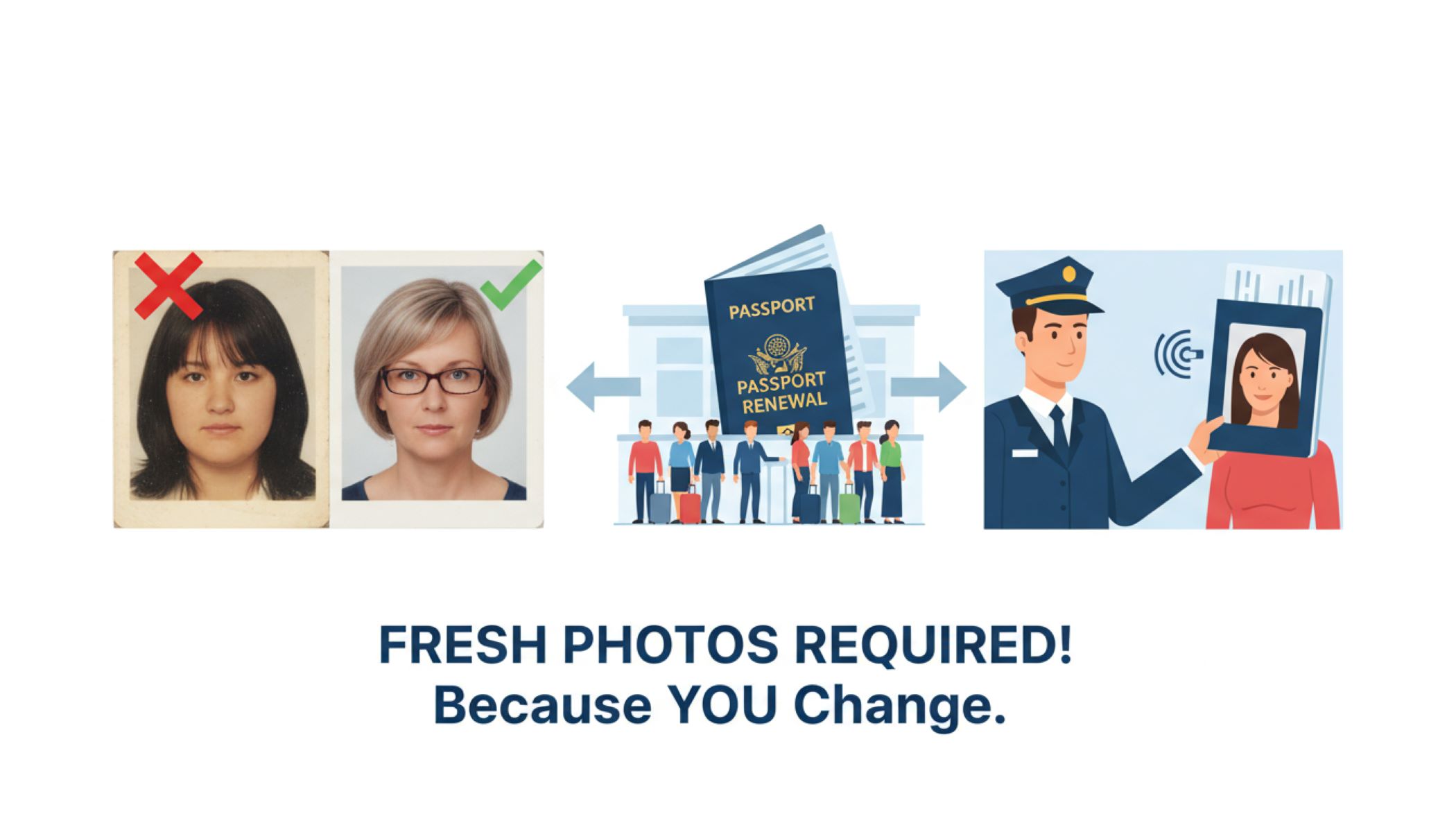
Renewing a passport isn’t exactly anyone’s idea of fun, but it’s one of those tasks you just can’t avoid if you want to keep traveling smoothly. Whether you’re planning a big vacation, applying for a visa, or simply making sure your ID is valid, knowing how the renewal process works can save you from a ton of headaches. One thing that always surprises people is the requirement for fresh photos. Why can’t you just reuse the old one? Well, there’s a good reason behind it, and we’ll dive into that too. In this article, we’ll go step by step through the passport renewal process, break down why new photographs are mandatory, and share a few handy tips to make everything quicker and easier.
Understanding Passport Renewal
Renewing a passport is a streamlined process compared to applying for a brand-new one, but it still requires careful attention to detail. When you renew your passport, you are essentially updating an existing official document rather than creating one from scratch. This ensures that your personal information, appearance, and travel eligibility remain current. The process is designed to confirm your identity and maintain security while minimizing the paperwork and procedures involved, especially for those who already have a valid or recently expired passport.
Your old passport plays a crucial role in the renewal process. It serves as proof of identity, citizenship, and your travel history. Immigration authorities use the details in your previous passport to verify that you are the same person and to cross-check any changes in your personal information. This step helps prevent identity fraud and ensures continuity in your travel record, which is particularly important for visa applications and international entry requirements.
Once your renewal application is approved, a new passport is issued. This document comes with updated information, a new validity period, and, increasingly, current biometric data such as facial recognition details or fingerprints. This ensures that the passport is not only a valid travel document but also aligned with modern security standards. The new passport replaces the old one while maintaining a connection to your previous travel history for legal and administrative purposes.
Although renewals are generally faster than first-time applications, they still have strict rules that must be followed. For example, you need to provide up-to-date photographs, accurate personal information, and sometimes proof of address or identity changes. Missing or outdated documents can result in delays, making it important to carefully follow the renewal instructions provided by your country’s passport office. By understanding the process thoroughly, applicants can avoid common pitfalls and receive their renewed passport efficiently, ready for international travel without unnecessary stress.
Why Passports Expire in the First Place
| Reason for Expiry | Explanation | Impact on Traveler | Government Benefit | Example |
| Changes in Appearance | Facial features change due to aging, weight, or hairstyle | Old photos may no longer match the traveler | Ensures identity verification is accurate | Someone with a drastically different hairstyle may be denied boarding without updated photo |
| Security Enhancements | Anti-forgery features, holograms, and biometric updates evolve | Travelers benefit from safer, more secure documents | Reduces passport fraud and identity theft | Biometric passports replace older versions lacking chips |
| Technological Advances | Border control systems use advanced facial recognition and scanning | Easier and faster passage through automated gates | Ensures compatibility with new international systems | Airports implement automated e-gates requiring up-to-date biometric data |
| International Compliance | Adherence to ICAO and other global travel standards | Travelers meet entry requirements in foreign countries | Harmonizes passport standards globally | Some countries refuse entry if the passport doesn’t meet ICAO photo requirements |
| Document Integrity | Wear and tear can damage passports over time | Damaged documents may be rejected at border control | Maintains official document integrity | A torn passport page may cause delays or denial at immigration |
Step-By-Step Passport Renewal Process
Renewing a passport can seem complicated at first, but breaking it down into clear steps makes the process much easier to follow. While the exact requirements vary by country, the general flow is remarkably similar worldwide. Here’s a detailed step-by-step guide to help you navigate your passport renewal:
- Check Eligibility for Renewal
Before starting the renewal process, confirm that your passport qualifies for renewal. Not every passport can be renewed. Factors such as age at issuance, expiration date, and document condition play a crucial role. Typically, passports that are expired within the last 5–10 years, issued when the holder was an adult, or still in good, readable condition are eligible for renewal. If your passport is severely damaged, lost, or expired beyond the allowed timeframe, you may need to apply for a brand-new passport instead. - Gather Required Documents
Preparation is key to avoiding delays. Collect all necessary documents before starting your application. This usually includes your most recent passport, freshly taken passport photos, a completed renewal application form, proof of identity, and payment for the applicable fees. Some countries may also require proof of address, a copy of your birth certificate, or additional supporting documents depending on the circumstances. Having everything ready ensures a smoother submission process. - Fill Out the Application Form
Accurately completing the renewal application is critical. Many countries offer online application options, while others still require in-person submission. Ensure that all personal information, including name, date of birth, and contact details, matches your official records. Mistakes or inconsistencies can result in delays or rejection, so double-check every field. Some countries also allow partial pre-filling of information online to simplify the process. - Submit Recent Passport Photos
Passport photos are a mandatory part of the renewal process. They must meet specific standards for size, background, facial expression, and clarity. Using old photos or images that don’t adhere to official requirements can lead to your application being rejected. Many applicants underestimate the importance of professional-quality photos, but they are essential for identity verification and compatibility with biometric systems. - Pay the Renewal Fee
Payment of the required renewal fee is another essential step. Costs vary depending on the country and the type of service you choose, such as standard processing, expedited service, or same-day issuance. Keep proof of payment, as some authorities may request confirmation during submission. Fees can often be paid online, by bank transfer, or in person at the passport office. - Submit the Application
Once your documents and payment are ready, submit your renewal application through the designated channel—online, by mail, or in person. Some countries require scheduling an appointment if submission is in person. During submission, officials may verify your identity and review all documents for completeness. Ensure that all required materials are included to prevent processing delays.
Why Fresh Photos Are Required
Many people wonder why they need to submit new photos when renewing a passport, especially if their previous passport already included a perfectly good image. The main reason is that appearances naturally change over time. Aging, changes in hairstyle, weight fluctuations, and even subtle facial differences can make it harder for authorities to accurately recognize a traveler. A fresh photo ensures that the passport accurately reflects how you look today, which is critical for identity verification at border crossings and during visa applications.
Another crucial reason for requiring new photos is security. Passports are high-value documents that grant access across international borders, making them a prime target for fraud and identity theft. Using an outdated photo increases the risk of someone misusing a passport, either by impersonating the holder or altering the document. Submitting a recent, high-quality photo helps authorities confirm that the person carrying the passport is indeed the rightful owner, protecting both the traveler and the integrity of the passport system.
Updated biometric standards also play a major role in photo requirements. Modern passports often include biometric data, such as facial recognition or fingerprints, which rely on precise imaging to function properly. Photos from a decade ago may not meet today’s strict biometric specifications, which could cause issues with automated border control systems and slow down the travel process. A current photo ensures compatibility with these systems, making international travel smoother and more secure.
Finally, consistency with international rules is essential. The International Civil Aviation Organization (ICAO) sets global standards for passport photos to ensure uniformity and recognition across countries. This means that passport authorities around the world can rely on the same criteria to verify a traveler’s identity quickly and accurately. By providing a fresh photo, you help maintain international travel standards and reduce the chances of complications or delays when entering foreign countries.
Photo Requirements for Renewed Passports
| Requirement | Standard Size/Specification | Background | Expression & Pose | Additional Notes |
| Photo Size | 2×2 inches (51×51 mm) | Plain white or off-white | Face fully visible, centered | Must fill the frame without cutting off the top of the head or chin |
| Head & Face Position | Head straight, eyes open | N/A | Neutral expression, mouth closed | No tilting or turning of the head; both ears should be visible if possible |
| Clothing | Everyday attire, no uniforms | N/A | N/A | Avoid military or official uniforms; no hats or head coverings unless for religious reasons |
| Glasses & Accessories | No tinted or reflective glasses | N/A | N/A | Clear prescription glasses allowed if eyes fully visible; no sunglasses |
| Recency | Taken within the last 6 months | N/A | N/A | Ensures the photo accurately reflects current appearance; recent hairstyles and facial features must match |
Common Mistakes People Make With Passport Photos
Even though passport photo requirements are well-documented, many applicants still make errors that can delay or even reject their renewal applications. Understanding these common mistakes can save time, money, and unnecessary stress. Here’s a detailed list of frequent errors:
- Using selfies or casual phone photos instead of professional or officially compliant images. Selfies often have poor lighting, uneven framing, and distort facial proportions, which can lead to rejection.
- Smiling too broadly, frowning, or making unusual expressions. Passport photos require a neutral expression with both eyes open and mouth closed to ensure accurate facial recognition.
- Wearing glasses, hats, or accessories that cover the face. Reflective lenses, tinted glasses, or headgear (unless for religious reasons) can obscure facial features and prevent authorities from verifying identity.
- Submitting old photos “just because they look good” or are convenient. Photos must be recent—usually taken within the last six months—to reflect current appearance accurately.
- Editing photos with filters, digital enhancements, or retouching software. Any alterations can compromise the integrity of the image and may lead to application rejection.
- Poor lighting or shadows on the face. Uneven lighting can obscure facial features and make the photo incompatible with biometric systems used at border controls.
- Inappropriate background. Passport photos require a plain, light-colored background; busy or patterned backgrounds can lead to non-compliance.
- Incorrect photo size or cropping. The face should fill the frame appropriately, without cutting off the top of the head, chin, or ears. Mis-sized photos often result in rejection.
- Wearing clothing similar to the background. Light-colored tops against a white background or dark clothing in certain standards can reduce contrast, making facial recognition harder.
- Not following country-specific requirements. Some nations have additional rules for infants, children, or specific biometric standards. Ignoring these leads to delays or denials.